Genoa NFH
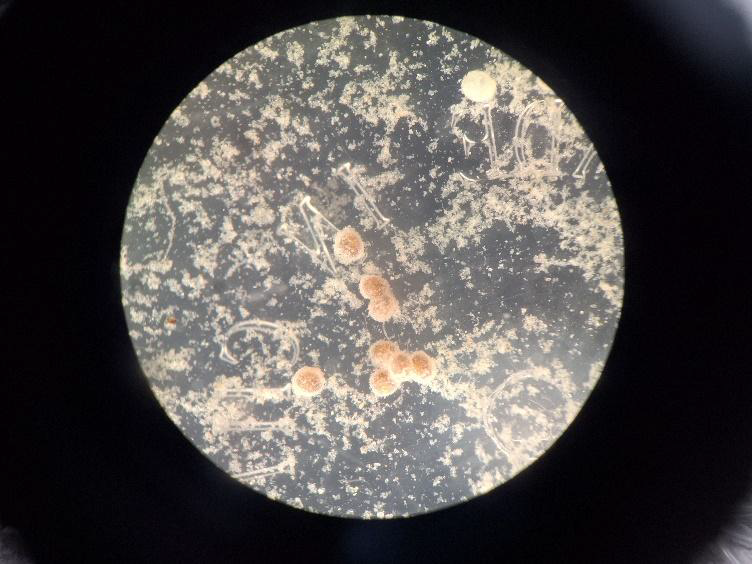
Photo: Hines Emerald eggs hanging out, waiting for spring to start. Photo credit: Beth Glidewell/USFWS
Hine’s Emerald Dragonfly eggs collected last August were transferred to Genoa NFH earlier this spring after overwintering with partners from the University of South Dakota. The eggs, from 3 maternal lines, are currently in ‘winter’ conditions in a holding chamber at the hatchery and will be slowly warmed at the end of March. The warmer conditions will initiate hatching, and we hope most larvae will have hatched by mid-April. Immediately after hatching, larvae are placed in individual culture cups and fed zooplankton filtered out of the hatchery’s ponds.
Spring pond conditions are managed for zooplankton production, which serves as food for young-of-the-year-old fish that have been produced and stocked into hatchery ponds. This large-scale production also means there are ample rotifers, daphnids, and copepod nauplii present to filter out and feed to dragonfly larvae. Dragonfly larvae are voracious predators right from the start, so the tiny hatchlings are fed zooplankton prey 3 times per week, starting the day or the day after they hatch. After 4-6 weeks in individual culture cups, larvae are large enough for the next culture stage – mesh screened cages. Larvae were moved into these cages in late May and early June and are currently in low-flow pond water conditions in the Dragonfly Culture Trailer.
This year’s cohort is the 4th round Genoa NFH has cultured from an Illinois population, previous year’s cohorts have come from populations in Door County, Wisconsin. This Illinois population, from locations along the Des Plaines River near Chicago, is a more highly threatened population that has retained higher genetic diversity, so we hope focusing head-starting and hatchery culture efforts of these individuals will help to bolster this critical population.
By: Beth Glidewell